AI news that matters, 10 repos worth your stars, big-tech moves, what I shipped this week, sysadmin ground truth, and the week's failures.
The Signal
AI news that actually matters.
AI news that actually matters.
Google shipped 15 second AI video for about a dollar a clip

On Nov 5, Google made Gemini Omni 1.2 Flash generally available across the Gemini API and Gemini for business, the first Omni model to reach GA status. Native clips now run up to 15 seconds, up from 10 in Omni 1.1, with duration selectable in 1 second steps from 3 to 15 seconds. The new trick is multi-turn conversational editing: interpolate between a first and last frame, or extend a clip by 3 to 10 seconds per turn, up to 30 seconds total. Up to 6 reference images keep a character consistent across shots.
The price is the story. Video output costs $12 per 1M tokens, about $0.07 per second at 720p, so a 15 second 720p clip costs about $1.04. That is 30% cheaper than Omni 1.1. Output comes in 360p, 720p, 1080p, or 4K at 24 FPS with native audio. There is no free tier on the API, and in Google Flow the 15 second clips, Extend, and upscaling need a Google AI Plus, Pro, or Ultra plan.
One date to put in your calendar: from Dec 3, requests to gemini-omni-1.1-flash auto-route to 1.2 and bill at 1.2 rates. If you pinned 1.1, your billing changes without a code change.
What it means. Short AI video just crossed into impulse-buy pricing. A 15 second clip for about a dollar, editable in plain language frame to frame, makes AI video a normal feature in a product instead of a demo you budget for. The pattern to steal is the editing loop: first frame to last frame interpolation turns a video model into a transition engine, and transitions are what most product video actually is. Plan around the Dec 3 migration now, not when the invoice moves.
OpenAI promised to pay its own power bills
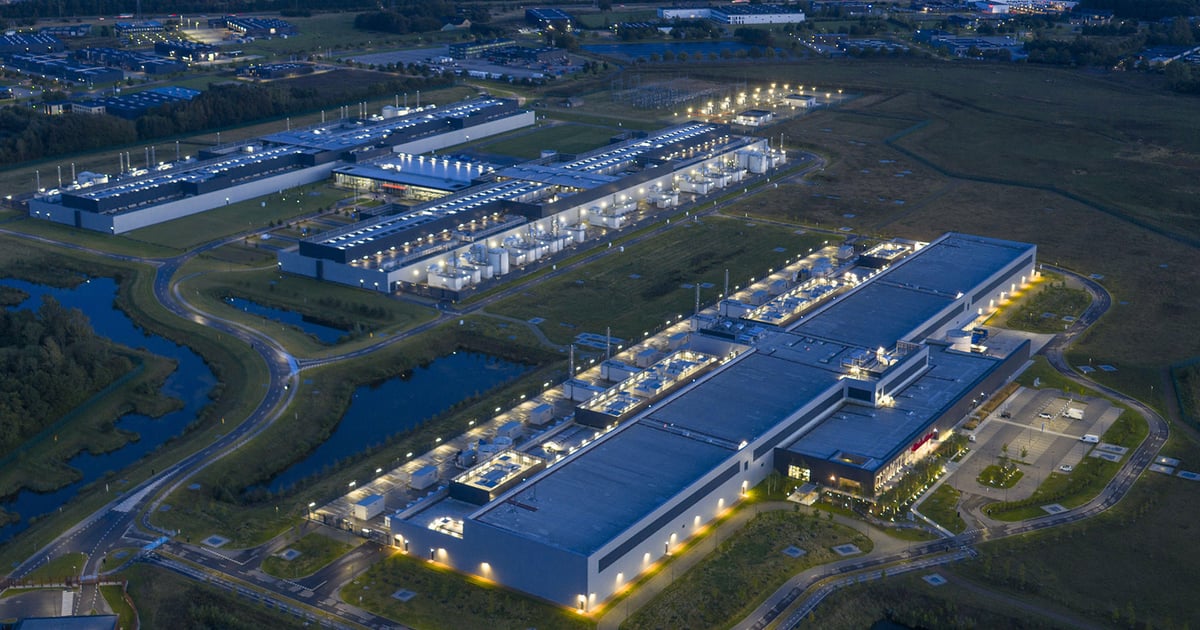
On Nov 5, OpenAI published a National Community Compact and a Compute Campus Policy Blueprint, two days after US voters backed limits on data center growth at the ballot box. The compact says future campuses OpenAI owns and operates will pay the full cost of the electricity they use plus the grid infrastructure needed to serve them, with financial guarantees posted before major spending so households are not left paying for upgrades if a project is delayed, scaled back, or canceled. It will stop using broad NDAs with public officials in campus negotiations, with narrow exceptions for security information and trade secrets, and it voided such an agreement in Effingham County, Georgia, in July.
Each future owned campus gets its own local agreement reflecting resident priorities, a named local contact, and an annual public progress report. Site disclosures cover electricity and water use, noise, and local hiring. At Effingham County, an agreement with Georgia Power lets electricity deliveries be cut by up to 1,000 MW during peak demand, and a $4.8M grant helps provide free school meals for about 14,000 students.
The context is a backlash with numbers behind it. At least 45 data center projects worth $88B faced local opposition in Q2 2026, and by the morning of Nov 4, results for 33 of 45 local data center ballot measures were reported as restricting development. An NBC News Election Day poll found 76% of voters opposed data centers in their communities.
The limits matter as much as the pledges. The compact covers only campuses OpenAI owns and operates, a minority of its compute, since most capacity is leased or partner-built. The blueprint is a proposal to lawmakers, not law, and the pledges carry no stated enforcement or penalty. (dig.watch)
What it means. Community opposition is now a deployment risk on par with power supply. OpenAI just wrote the template every hyperscaler will be measured against: pay your own power bill, no secret deals with officials, publish your water and noise numbers. If your product depends on a data center buildout, the permitting timeline is now part of the roadmap. The test is the first local compact at Effingham and its first independent noise study, not the press release.
ChatGPT Images 2.6 turns image generation into animation

On Nov 4, OpenAI shipped ChatGPT Images 2.6 in ChatGPT and Codex, plus the API as two models: GPT-Image-2.6 Flare for speed and GPT-Image-2.6 Sunburst for quality and consistency across edits. The headline feature is animated GIFs from a prompt or an image, with adjustable speed and editable individual frames. Through the API you get 2 to 64 frames at 20 to 2000 ms each. Saved reference images of yourself, a pet, or a character can be reused without re-uploading. The API also gains SVG output and a complexity setting, and Flare returns a low quality image in as little as 6 seconds.
OpenAI claims 50% faster generation than 2.5, with no published baseline. One Hacker News user timed 2.6 at 6.7 to 8.9 seconds for 1024x1024 against 12.0 seconds for 2.5 medium. The price catch is in the token math: per-token rates are unchanged, but OpenAI's own token calculator applies a multiplier of 4.2x at low quality and 3.3x at medium versus 2.5, so cheap images cost 3 to 4 times more in tokens. High quality and above are unchanged. Scale keeps climbing: OpenAI reports 4 billion images generated per week across its products, up 1 billion since September.
What it means. GIFs as a first-class API output turn image generation into animation generation with one parameter change. But re-price before you switch: the 50% speed gain at low and medium quality is paid for in tokens, so a low quality image pipeline gets faster and roughly 4 times more expensive at the same time. If your product generates thumbnails or previews at low quality, check the token calculator before you migrate, not after the invoice.
Like this issue? Get the next one in your inbox. New issues most Fridays, 9am PT.
SubscribeTrending
Repos worth your stars this week.
Repos worth your stars this week.
Agent tooling owns the week. 7 of the 10 picks are Claude Code skills, agent harnesses, or agent memory. The standout is the skills gold rush: Anthropic's own skills repo, three competing design skills, and a remote control surface for running agents from your phone.
1. thedotmack/claude-mem: persistent memory for coding agents
claude-mem (113,870 stars): persistent context across sessions for every agent. It records everything a coding agent does in a session, compresses it with AI, and injects the relevant context back into future sessions, so the agent remembers past decisions, mistakes, and project conventions instead of starting cold. It stores observations in SQLite with ChromaDB embeddings and works across Claude Code, OpenClaw, Codex, Gemini, Copilot, OpenCode, and more.
How to apply: install it as a Claude Code plugin, let it observe a few sessions, then ask the agent about a decision from last week and watch it answer from its own compressed history instead of re-reading the codebase. Update to v15.8.3 or later, which carries a security fix for installs made Oct 25 to Nov 2.
Who is using it: a member of the Vercel OSS Program and sponsored by Greptile. The pattern to steal is the compressed memory itself: any long-running assistant needs a persistent model of the user, not just a chat log.
2. pingdotgg/t3code: control your agents from your phone
t3code (49,292 stars, up 16.2K this week, the biggest weekly gain of any repo): drive the coding agents already on your machine from a mobile app, a web app, or an Electron desktop app. It works with Claude Code, Codex, Cursor, Grok Build, OpenCode, and Google Antigravity, uses your existing agent subscriptions with no new model bill, and connects agents over MCP.
How to apply: install the phone app, pair it with the machine where your agents run, and approve or steer a long Claude Code run from the couch instead of sitting at the desk watching the terminal.
Who is using it: built by Theo Browne, creator of the T3 Stack, with the iOS and Android apps live in the App Store and Google Play. The authors built it because existing options did not meet their bar for performance and remote use.
3. anthropics/skills: Anthropic's official Agent Skills
skills (188,077 stars): Anthropic's own implementation of Agent Skills, folders of instructions, scripts, and resources that Claude loads on demand to get better at specialized tasks. Examples include building documents that follow a company's brand guidelines, running an organization's specific data workflows, and automating personal tasks. It is the reference implementation of the open Agent Skills standard at agentskills.io.
How to apply: copy a skill folder into your Claude Code skills directory and it loads dynamically when relevant, or fork one as a template and write your own skill encoding your team's repeatable workflow, brand rules, deploy checklist, report format, so every agent run follows it.
Who is using it: Anthropic itself. The construction method is the lesson: a skill is just markdown plus scripts plus resources, which means you can build the same thing for your org in an afternoon.
4. Nutlope/hallmark: the anti-AI-slop design skill
hallmark (49,387 stars): an anti-AI-slop design skill for Claude Code, Cursor, and Codex. It deals three themes from a catalog of fifty materials, builds the page around what the visitor came to do, then lints the result in a real browser against machine-made tells: the eyebrow above every heading, tracked-capital labels, one colored word in a headline, a hero that misses its screen. A fresh-context reviewer gets the last word.
How to apply: drop it into Claude Code, build a landing page with your agent, then run /hallmark audit and fix the flagged tells before shipping. Pick a theme that fits the brand instead of accepting the default gradient-purple look.
Who is using it: made by Together AI. Hallmark and Impeccable below are direct rivals in the same anti-slop lane, and the comparison is the point: Hallmark lints against a catalog of tells, Impeccable reviews like a second designer.
5. pbakaus/impeccable: a design vocabulary for your coding agent
impeccable (104,566 stars): the design vocabulary for your coding agent. It steers agents with polish and bolder, reviews with critique and audit, and catches AI slop before it ships. Install with npx impeccable install, then /impeccable init in your agent. It works with Claude Code, Cursor, Codex CLI, GitHub Copilot, Devin, Replit Agent, Gemini CLI, Grok Build, OpenCode, Google Antigravity, Kiro, Trae, and more.
How to apply: install it once per project, then run /impeccable critique on an agent-built page before review. It reads as a second designer in the loop rather than a template.
Who is using it: the Neo Mirai case study on impeccable.style took a conference site from mockup to shipped page. If Hallmark is a linter for slop, Impeccable is a vocabulary for taste, and most agent-built pages need both.
6. obra/superpowers: a full dev methodology for coding agents
superpowers (313,449 stars): a complete software development methodology for coding agents, built on composable skills plus initial instructions that make the agent actually use them. It covers brainstorming, planning, subagent-driven development, and the full SDLC, and installs per harness across Claude Code, Antigravity, Codex, Cursor, Devin, Gemini CLI, GitHub Copilot, and others.
How to apply: install it in Claude Code and start a feature with the brainstorming skill instead of a bare prompt. The methodology forces a plan, review, and test discipline the agent would otherwise skip.
Who is using it: listed in Claude's official plugin marketplace. Author Jesse Vincent. The lesson is that skills alone are not enough; the methodology that makes the agent use them is the product.
7. HKUDS/DeepTutor: lifelong personalized tutoring
DeepTutor (55,836 stars): a multi-agent tutoring system that remembers the learner across sessions and personalizes teaching over the long term, instead of answering one question and forgetting. It combines deep research, RAG, and interactive learning, ships as a CLI tool and a macOS app, and is documented at deeptutor.info.
How to apply: use it as the pattern for any long-running assistant that must remember a user. Keep a persistent learner model, not just a chat log, and let retrieval pull past sessions into each new one.
Who is using it: built by the HKUDS lab at the University of Hong Kong, with a paper at arxiv.org/abs/2604.26962. Same memory lesson as claude-mem, applied to people instead of codebases.
8. calesthio/OpenMontage: an open source video production studio
OpenMontage (77,558 stars): the world's first open-source, agentic video production system. It turns an AI coding assistant into a full video production studio: 12 production pipelines, 100+ tools, and 700+ agent skill and production-knowledge files covering image and video generation, narration, music, captions, and editing with FFmpeg and Remotion. It wires together models like Flux, Kling, and Chirp3-HD through fal.ai and other providers.
How to apply: pick a pipeline, short, documentary, or music showcase, give it a script, and let the agents generate clips, narration, and the edit. A solo builder can ship a finished short without touching a timeline.
Who is using it: the showcase short "The Last Banana", a 60 second Pixar-style animated short made with 6 Kling v3 clips, Chirp3-HD narration, and Remotion, total generation cost $1.33. Pair this with the Gemini Omni pricing above and the cost of a short film just fell below the cost of lunch.
9. NVIDIA/auto-ontology: a graph context layer for agents
auto-ontology (8,626 stars, top daily trending repo Nov 6): a Python framework for building semantic, graph-based reasoning layers over data. It builds a context layer from enterprise metadata that tells agents where data lives, what it means, whether and how to use it, where it came from, and what is similar. It reconciles definitions across systems so an agent can generate deterministic queries and retrieve context it can explain.
How to apply: point it at your warehouse metadata before wiring an agent to analytics. The ontology becomes the contract that stops the agent inventing a metric definition on the fly.
Who is using it: NVIDIA, Apache-2.0. The smallest star count on this list but the fastest daily velocity and the only enterprise data entry. The README's framing example says it plainly: a revenue metric answered faster is worth nothing if the number is wrong.
10. vercel-labs/agent-desktop: computer use without screenshots
agent-desktop (17,908 stars): computer use on macOS, Windows, and Linux through the OS accessibility tree instead of screenshots or pixel matching. It reads the UI as JSON with a ref for every actionable element. The agent clicks or types on a ref, re-reads the UI to check the result, and repeats. It ships as a CLI and a C library, with no model inside. Headless by default: ref actions use the accessibility API without moving the pointer or taking focus.
How to apply: give your agent a real desktop app to operate, fill a form, click through an installer, drive a legacy tool with no API, where screenshots would be slow and flaky. The ref loop is cheaper and more reliable than vision.
Who is using it: a Vercel Labs product, sibling of agent-browser. Install via npm or Homebrew; agent-desktop permissions --guide walks through the macOS Accessibility grant.
Big Tech
What the giants did, and what it means for builders.
What the giants did, and what to steal.
Q3 earnings: the cloud grew, the market punished the bill. Meta, Alphabet, Microsoft, and Amazon lost about $665B in combined market value in the first trading session after each reported Q3 results. Alphabet accounted for $496.5B of it, about 75%. Cloud growth was strong everywhere: Google Cloud revenue up 103% year over year to $30.7B, Azure up 48% to $33.2B, AWS up 39% to $46.0B, its fastest in nearly 5 years. The market punished capex, not revenue. Alphabet capex more than doubled and free cash flow was negative for a second straight quarter; Amazon and Meta also went free-cash-flow negative. Combined 2026 capex guidance for the big four sits near $730B. Apple reported Nov 2 with fiscal Q4 revenue of $114.5B, up 12% year over year, a September-quarter record, while capex fell 29% to $9.0B and free cash flow rose 38% to $136.1B, leaning on third-party cloud for Siri AI inference. Nvidia reports Nov 17. The builder takeaway: the AI buildout is no longer judged on growth, it is judged on cash. The pattern to steal is Apple's: rent the inference, own the margin, and let someone else carry the data center balance sheet.
Google cosigned Anthropic's $19B Kentucky lease. On Nov 4, Google signed three credit support agreements backing Anthropic's rent under a 20 year lease at TeraWulf's Justified Data Campus in Hawesville, Kentucky: about 401 MW of critical IT load, about $19B in contracted lease commitments. Google is not lending money or building the campus. The backstop lets TeraWulf raise debt financing to build, priced near Google's credit instead of a startup tenant's. If Anthropic defaults or becomes insolvent, Google can take over the lease as tenant, or pay a termination fee and take a proportional ownership stake in the project subsidiary. Data halls deliver in phases from late 2027 through Q2 2028, and rent starts only when each hall is handed over. The builder takeaway: the AI infrastructure boom now runs on credit engineering, not just concrete. If you sell into this buildout, the counterparty that matters is often not the tenant on the contract but the giant cosigning behind it.
Qualcomm beat estimates, then fell: handsets down 26%, data center begins. Fiscal Q4 2026 revenue was $10.44B, down 7% year over year, a cent above EPS estimates. Handset chip revenue fell 26% to $5.14B as Apple exits, while automotive revenue rose 89% to $1.99B, its first $2B quarter. The data center business moves from concept to revenue: custom chip supply agreements with Amazon and another unnamed global hyperscaler, with over $650M expected in fiscal Q1 2027, a $5B fiscal 2027 target, and a $7B annualized exit run rate. Guidance for fiscal Q1 2027 came in soft on costs, and shares fell about 7.5% after hours. CEO Cristiano Amon: "Fiscal 2027 marks the start of our non-handset revenue inflection, including the ramp of our Data Center business." The builder takeaway: Qualcomm is a case study in escaping a single customer. If your roadmap depends on one big customer or one input cost, the quarter where both turn at once is the quarter that tests whether you built a second business in time.
From My Terminal
What I shipped this week.
What I shipped this week.
pulse is the new project. An AI marketing and SEO system for all 15 Cooli sites, built Oct 31 to Nov 6 in 79 commits and 28 merged pull requests. It maps real Google searches, writes one guide per topic, has TypeSafe Jev audit and rework every page until it hits target, and cut the SEO tick from 6 KV writes to 1. Marketing run by the AI, measured by the AI, fixed by the AI.
Santa Wishes split out of keepsake. Santa Wishes and the Secret Santa Hotline moved into their own Worker on Nov 6, with hotline prices now on the page: $19, $39, and $69 for up to 10, 20, and 40 people, 2 calls a person. Keepsake kept the Secret Santa call-in work: personal codes, Santa names your recipient, calls transcribed as they end, Naughty List call-in only, every call opens by saying it is recorded. One honest flag: keepsake's commits the same morning set the hotline at $9, $19, and $29 with 3 calls a person, so the two repos disagreed for a few hours. The santawishes prices are the later commits, so they look like the corrected ones.
Sentry everywhere. One privacy pass landed across keepsake, journal, sevenfold, taxlines, billcheck, cooli, and warroom on Nov 5: self-hosted SDK behind our own domain, masked Replay, relay spans dropped, plus the same search-led SEO commit everywhere, one H1, title and description lengths, structured data. Warroom went further and let search engines in with a real robots.txt and sitemap.xml. Both paths had been returning the app's HTML page, so robots.txt carried a whole HTML document after Cloudflare's managed section.
kino kept shipping. Direct-stream Ether playback without re-encoding, resume where a break-off left you, Top Shelf Continue Watching, season pages, and a live curator that keeps only streams the Apple TV can decode. The funniest fix of the week: a PlaybackInfo request that times out is asked once more, because its database locks every half hour and a restart in that window stopped a film at 41 minutes.
halftone open-sourced Oct 31. The morning paper is now public, with WSJ headlines, county-by-county Senate and governor races, a second-read check on every story, and Cartesia Sonic 3.6 voices for Listen.
options-paper-desk is live and losing. The $50 paper options account carried over at $28.78 on Oct 30 and sat at $23.60 with zero open positions at the Nov 5 close. The engine now runs on GitHub Actions. Down by more than half, on paper, which is exactly what paper trading is for.
orbis hardened. Audit holes closed in the unblock flow, filtering survives a restart, Amazon's app kept working under aggressive lists, and DNS rebinding exemptions for spelled-out names.
warroom: 81 commits, PRs 31 to 38. Launches placed where they fired from, a 60 day lookback, and search engines finally allowed in.
The honest quiet part. cooli-poise, the flagship, had zero commits in the window, and poise-ui-redesign has not been pushed since Oct 10. The Poise work this week happened in cooli-poise-desktop and in pulse, the marketing machine that now sells Poise, not in the main Poise app. And ether's 100+ commits are all upstream sync, not my work.
On Call
What broke, what to patch, what to check before Monday.
What broke, what to patch, what to check before Monday.
CVE-2026-98432: a 9.8 Linux kernel TCP bug, and Ubuntu still has no shipped fix. A use-after-free in the Linux kernel IPv4 TCP handshake, present since kernel 4.4, triggered by a TCP SYN carrying an IPv4 Record Route or Timestamp option. Red Hat shipped fixed kernels Nov 1 for RHEL 8, 9, and 10. Debian, AlmaLinux, Rocky Linux, Oracle Linux, and SUSE shipped fixes. Ubuntu's fixed kernels are still only in the -proposed testing pocket with no release date. Anthropic's red team reported an AI model built a working remote root exploit against a server with a multipath TCP listener: about 48 minutes past KASLR, 5 more minutes to a shell. The exploit has not been released and there are no reports of in-the-wild use as of Nov 4. Scanning has started: researcher Marcus Hutchins reported Nov 2 to 3 that residential proxies and Russia-based VPNs were probing port 443 with MPTCP connections. His own scan found about 2.1 million servers answering an MPTCP connection on 443. The gotcha for Go shops: since Go 1.24, Go servers listen with MPTCP by default when the kernel allows it, so Caddy and other Go services may expose an MPTCP listener nobody configured. (getrff.com) Lesson: patch and reboot, the kernel only protects you once you are running it, check ss -lnMp for surprise MPTCP listeners, and put the nftables drop rule on Ubuntu boxes until the kernel reaches normal updates. A patch installed but not booted is not a patch.
*sshole, CVE-2026-123158: a 257 character password opens locked accounts on Alpine. Disclosed Nov 5 by researcher Ozgün Kültekin: a password authentication bypass in sshd on Linux systems using musl libc without PAM, most notably Alpine Linux. The mechanism is a 14 year chain. In 1980 Bill Joy put * in /etc/passwd for accounts that should never log in. In 2012 musl changed crypt() to return * instead of NULL on failure, and capped passwords at 256 bytes, so any password over 256 bytes makes crypt() fail and return *. In 2016 OpenSSH's fix for CVE-2016-6210 made sshd hash the supplied password even for accounts with no real hash, borrowing another account's salt. In 2022 Alpine 3.16 switched root from ! to * so SSH keys still work with PAM disabled. Put together: a password of 257 to 1024 characters makes musl crypt() return *, sshd compares it to the account's stored *, they match, login succeeds. One connection, works every time, no retries. Alpine's official AWS and Azure images ship the default alpine user this way, with passwordless doas, so it is root. Fixed in OpenSSH 10.6p2, released Nov 5. (sshhole.com) Lesson: update to OpenSSH 10.6p2 now with apk upgrade openssh, or kill password logins with PasswordAuthentication no. Then audit: any * in /etc/shadow next to a reachable sshd is an account that should never take a password. A locked account is only as locked as the code path that checks it.
Android SMS of Death, CVE-2026-58882: one text can kill calls, no tap needed. A malformed WAP Push message crashes the com.android.phone process, dropping calls including emergency calls, with temporary loss of cellular service. The victim never opens anything; Android processes the message before it reaches the messaging app. A public proof of concept exists; no confirmed widespread exploitation. Disclosed Oct 29 by researcher Mark Blaszczyk, who reported it to Google in May. Google fixed it in the November 2026 Android security bulletin at patch level 2026-11-01, for Android 14, 15, 16, 16 QPR2, and 17. Android 12 and 13 are not in Google's fix list even though the researcher reproduced the flaw on them. (TechRepublic) Lesson: for fleets, enforce a minimum patch level of 2026-11-01 through MDM and inventory first, because rollout depends on manufacturer, model, and carrier. Android 12 and 13 devices with no manufacturer fix need an OS upgrade or replacement. And do not factory-reset a crashing phone as a first step: a malicious message retained by the carrier can be redelivered after the reset.
Fiasco
The week's best failures, ranked by schadenfreude.
The week's failures, ranked by schadenfreude.
Ghana's national health data went offline over a $64,510.95 unpaid cloud bill

On Oct 29, cloud provider Akamai switched off all 10 servers hosting Ghana Health Service systems over an outstanding payment of US$64,510.95. Down went DHIMS2, the country's central health data platform, plus the Planning and Budget Management Information System, eTracker, family planning platform, the National Malaria Data Repository, HIV and tuberculosis trackers, the non-communicable disease tracker, the inpatient morbidity and mortality system, SMS alerts, the birth-notification gateway, and the ISRS sample tracker. Hospitals nationwide were ordered back to paper: manual registers and monthly summary forms for October and November 2026, to be typed into DHIMS2 later.
The kicker: this was predicted. A December 2023 review by GIZ with GHS and Digital Square had already flagged that donor funding for DHIMS2 hosting had ended and nobody knew who would pay the annual bill going forward. It happened during an Ebola alert, with the health ministry running 21-day observation for travellers from affected countries, so routine disease surveillance data stopped flowing exactly when it mattered.
What saved them: no breach, no data lost. Director-General Dr Samuel Kaba Akoriyea's Nov 2 memo says nightly encrypted backups of every system sit outside the suspended account and are current to Oct 29. Two recovery options: pay the $64,510.95 and reactivate the account, or buy new servers and rebuild from backups, which takes up to 6 weeks after the hardware arrives. (newsthemegh.com)
The lesson: an unpaid invoice is an outage with a finance department as the root cause. Put hosting bills for critical systems on autopay with a named owner and a renewal alert, and keep backups outside the account that can be switched off. Ghana did the backup part right. The billing part is what took a country's health data offline.
Beget: a destructive cyberattack wiped a Russian hoster's VPS, S3, and Kubernetes data

Overnight Nov 1 to 2, attackers got into the management infrastructure of Beget, Russia's second-largest registrar, and ran destructive deletion scripts instead of encrypting for ransom. VPS environments, S3 storage, and Kubernetes clusters were wiped, along with IP allocations and CDN configs. Binary VPS backups were lost too. DNS, the control panel, email, and hosted sites went down, and even sites hosted elsewhere broke because their domains used Beget DNS. Beget declared force majeure under Russian law.
Recovery, per Beget's own Nov 5 update: shared hosting 60% restored, up from 35% on Nov 4, managed dedicated servers 40%, unmanaged dedicated servers 100%. Most file-level VPS backups survived, but restoring them needs backup servers rebuilt first, and over 1,000 servers need manual inspection and reconfiguration because the automated tooling was compromised. Billing is suspended while services stay unrestored. No firm ETA for heavily affected systems. Ransomware has not been established; neither has data exfiltration, the entry point, or the attacker. (undercodenews.com)
The lesson: your backups are only as safe as the management plane that can delete them. Binary VPS backups lived inside the same administrative boundary as production and died with it; only file-level copies survived. Keep at least one backup copy outside the provider's control plane, immutable or on separate credentials, and test restoring from it. And if your registrar is also your DNS, a hoster outage takes down sites that live on other servers entirely.
Rhysida claims a 7.8 TB dump of a California city: police, 911 calls, W-2s, traffic lights
On Nov 4, the Rhysida ransomware group listed the city of El Cajon, CA on its leak site. The claimed haul is about 7.8 million files, 7.8 TB, current through late September 2026: the full file server, restricted police shares, the 911 dispatch center, production databases, workstation backups, and terminal-server profiles. Contents claimed: W-2s for all roughly 1,100 employees, 6.3 million 911 call recordings over about 3 years with caller phone, address, and GPS metadata, SQL backups including dispatch CAD, the evidence vault, crime lab and RMS, bank ACH private key and passphrase, corporate cards with PAN, CVV, and PIN, root access on the network core including traffic lights, 111 officer passcodes to the narcotics system, MFA server dump with TOTP secrets and hardware-token seeds, undercover unit rosters naming informants, and the Internal Affairs master tracker.
Say this plainly: this is a claim on a ransomware leak site, republished by threat-intel trackers. The city has not publicly confirmed an attack or what data was taken as of Nov 6, and a leak-site listing by itself does not prove a breach or that any specific data was taken. Treat the numbers as the attackers' claims, not confirmed facts. The scale of the listing is the story either way: this is what a municipal breach looks like when the attackers itemize it for buyers. (hookphish.com)
The lesson: a city network is one flat blast radius if police, 911, payroll, and the network core share the same file servers and credentials. Segment emergency services away from general city IT, keep MFA secrets and signing keys off the same backup set as everything else, and assume that once a leak-site listing goes up, the data is already being shopped whether or not the ransom is paid.
Freebies
Free stuff worth claiming this week. Verified this week; terms change fast.
- Inception Labs Mercury — 100M free tokens per new API key, ends Nov 15. inceptionlabs.ai
- StepFun StepAudio 3 — free preview ends Nov 8 at 7:59 AM PST. platform.stepfun.ai
- xKiro — 45 free models, 500K tokens a day, no card required. xkiro.com
- Webfetch — 1,000 free credits at signup plus code LAUNCH500 for 500 bonus, ends Dec 7. webfetch.ai
- Free.ai — 30,000 tokens per day, no card required, resets daily. free.ai
That is the week. If something here saved you time or sparked an idea, the best thanks is forwarding it to one person who would get something out of it.
Arafat