A proof nobody understands, an API rewrite with verification doing the heavy lifting, and a breach that started with one login. Plus 10 repos worth your stars, Jensen Huang's 11 day round trip, and the week's failures.
In this issue: The Signal, Trending, Big Tech, From My Terminal, On Call, and Fiasco.
The Signal
AI news that actually matters.
AI news that actually matters.
Claude helped certify a proof of the Riemann hypothesis, and nobody understands it yet

On Nov 20, Levent Alpöge, a mathematician at Anthropic, posted a four page note saying he believes he and Claude found a proof of the Riemann hypothesis, the 167 year old conjecture about the distribution of prime numbers, first stated in 1859. There was no conventional paper attached. The proof arrived only as Lean code: 175,187 Lean modules and about 17 million lines, a 239 MB compressed archive split into 14 parts, producing a proof export of roughly 61.6 GB. Alpöge built it with Claude over six weeks, from Oct 6 to Nov 16, and wrote that near the finish line Claude "flew, and danced, and sparkled."
What happened next. On Nov 21, the Lean Focused Research Organization and the Mathlib Initiative jointly certified the proof: "We have full confidence that Alpöge's proof of the Riemann Hypothesis is correct." Dozens of people compiled the library independently and reproduced the same raw proof export with no build failures. The exported proof was accepted by Lean's own kernel, by the independent checkers con-leche and con-ron, and by several third party checkers written in other languages. Andrew Sutherland at MIT ran the first public checks, with Claude Code, and posted the verification artifacts for anyone with about 100 GB of RAM to recheck. The Economist declared AI may have solved math's most important problem. A rival claim, a 940 page handwritten manuscript from Alessandro Masullo for the generalized version, was called invalid.
The catch, and it matters. The proof is certified, not settled. Nobody fully understands it, including Alpöge. As NYU mathematician Maksym Radziwiłł put it, Alpöge "produced a formal proof that he does not understand." As of Nov 22, two of Sutherland's check runs were still pending. On Nov 23, a preprint argued the certified derivation rests on premises stronger than the hypothesis itself and does not prove it in the ordinary sense. The Clay Mathematics Institute still lists the Riemann hypothesis as unsolved, and its $1 million prize needs 2 years of scrutiny after publication.
What it means. Verification is now a compute job. Understanding is the scarce resource. A 17 million line proof that a machine can check and no human can follow is a new kind of mathematical object: true by certificate, opaque by construction. The pattern to steal is narrower than the headlines. Formal proof as an artifact, with independent checkers as the review process, works for claims too big for any one reader. But a certificate is not comprehension, and comprehension is what turns a proof into new mathematics. The prize is not won yet, and the next two years will be mathematicians reading what Claude wrote, line by line, trying to learn what it found.
Anthropic rewrote its API in Rust, and Claude did the typing
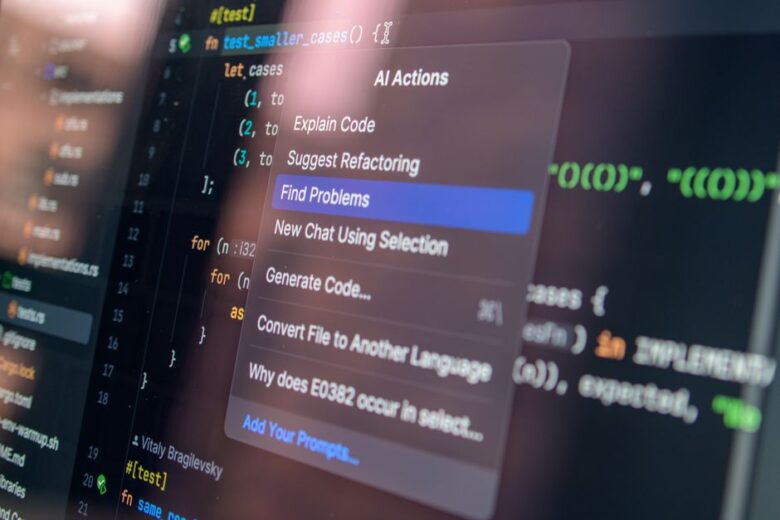
On Nov 26, Anthropic published how it moved its Messages API from Python to Rust, and Claude wrote the core request path in about a week. The interesting part is not the week of typing. It is the verification. Anthropic shadowed live traffic, compared every stage of the old and new paths, and sent agents to fix the differences, with no downtime and no feature freeze. The result is about 70 percent less CPU per request and about 20 percent faster median time to first token, on traffic that grew 1,800 times since early 2024.
What it means. Code generation is no longer the bottleneck. Verification is. A rewrite that used to need a team, a freeze window, and a prayer now needs an oracle: the old system running beside the new one, diffing everything, with agents closing the gaps. Steal the shape, not the language. If you are migrating anything live, keep the old path as the source of truth, shadow real traffic through both, and let the diff list drive the work. The Rust numbers are nice. The method is the part worth copying.
OpenAI will now run your prompts where even OpenAI cannot see them
On Nov 25, Sam Altman announced OpenAI is piloting Private Inference with a small group of business customers. Prompts and responses run inside confidential computing hardware, so the data stays protected while the model works on it. It is the second half of OpenAI Private Intelligence: Zero Data Retention covers what happens after processing, Private Inference covers during. It is alpha, with no pricing and no general availability date. (Channel Insider)
What it means. The privacy objection that keeps finance, legal, and health data off frontier models was never about storage. It was about the processing moment, the seconds when your data sits in someone else's memory, in the clear. This is the first credible answer to that objection from a frontier lab. The catch is trust: you are taking OpenAI's word that the enclave holds. Demand attestation before you send anything real, and treat the alpha as a design review, not a green light.
Like this issue? Get the next one in your inbox. New issues most Fridays, 9am PT.
SubscribeTrending
Repos worth your stars this week.
Repos worth your stars this week.
Agent tooling owns the week again. GitHub's daily board sat unchanged for 5 straight mornings, so these are the names that held the top. All 10 picks below, star counts verified Nov 27.
1. morluto/rea: reverse engineer anything with agents
rea (481K stars): reverse engineer anything with agents, from app behavior down to native binaries, through one MCP.
How to apply: run npx rea-agents setup, point it at an app whose feature you want to understand, and get the behavior traced down to the binary instead of guessing from the UI.
Who is using it: the showcase library at rea.tools documents real reverse engineering jobs, and the rea-agents npm package is the install path. At 481K stars it is the most starred repo on the board this week.
2. obra/superpowers: the skills framework Anthropic ships in its own marketplace
superpowers (328K stars): an agentic skills framework and software development methodology, by Jesse Vincent.
How to apply: install a skill instead of pasting the same instructions into every session. A skill is a repeatable workflow your agent loads on demand, and the methodology part is the point: these are written to survive real codebases, not demos.
Who is using it: Anthropic's own Claude Code plugin marketplace ships it, and Prime Radiant sells paid enterprise support around it. When the vendor's marketplace carries your framework, the pattern has already won.
3. affaan-m/ECC: the agent harness performance optimization system
ECC (312K stars): the agent harness performance optimization system. Skills, instincts, memory, security, and more, in one harness layer.
How to apply: drop it on an agent that keeps losing context or repeating work, and let the harness carry the parts that should not live in the prompt.
Who is using it: it ships as the ECC Tools GitHub App, installable on repos, and it took GitHub Trending Repo of the Day. A harness with its own app listing is a product, not a dotfiles repo.
4. deepseek-ai/deepseek-harness: DeepSeek's own harness, everything is a plugin
deepseek-harness (288K stars): DeepSeek Harness, everything is a plugin. An open source agent harness built on Cordis, in developer preview.
How to apply: run npx @deepseek-ai/dsh web and write a plugin instead of forking the harness. The architecture is the pitch: if everything is a plugin, the harness itself stays small.
Who is using it: DeepSeek AI builds and ships it, with docs at deepseek-harness.github.io. When a frontier lab open sources its own harness, read it before you build yours.
5. firecrawl/firecrawl: search, scrape, and 550 plus data providers in one API
firecrawl (211K stars): knowledge infrastructure to make agents smarter. Search, scrape, and access 550 plus data providers through one API, MCP, or CLI.
How to apply: give your agent one search call instead of a scraper you maintain. The discovery is free; running a tool uses the credits listed on it.
Who is using it: the hosted service at firecrawl.dev runs the same API, and its indexes cover 250M plus people and 75M plus companies, per the README. The moat is the index, not the scraper.
6. toeverything/AFFiNE: a local-first workspace that fuses Notion and Miro
AFFiNE (79K stars): a privacy-focused, local-first, open source workspace combining docs, whiteboards, and databases. There can be more than Notion and Miro.
How to apply: self-host it when the data should stay yours, and stop renting your notes back from a vendor month by month.
Who is using it: the hosted product at affine.pro, with a Product Hunt featured badge. The local-first pitch lands differently when the company also runs the cloud version: you can leave, and they know it.
7. mvanhorn/last30days-skill: research any topic across 8 sources, with receipts
last30days-skill (76K stars): an AI agent skill that researches any topic across Reddit, X, YouTube, Hacker News, Polymarket, and the web, then synthesizes a grounded summary.
How to apply: ask your agent for a brief on anything from the last 30 days and get dated items with sources instead of a confident paragraph. The dated-items discipline is the whole trick: every claim carries its date, so staleness is visible instead of hidden.
Who is using it: AI Parabellum tested v4.3.2: 107 dated items from 8 sources in 5 minutes 24 seconds for $1.14 per brief. It also reached GitHub Trending number 1 Repo of the Day.
8. jingyaogong/minimind: train your own 64M LLM from scratch in 2 hours
minimind (72K stars): train your own 64M parameter LLM from scratch in about 2 hours.
How to apply: run the full recipe once, on one GPU, and you will understand pretraining, supervised fine-tuning, and the training loop in a way no blog post teaches. The honest numbers: about 2 hours of fine-tuning on one RTX 3090 for about 3 yuan of rental, though the full recipe takes much longer.
Who is using it: weights are hosted on Hugging Face as jingyaogong/minimind-3, with hands-on tutorials from AI Frontier Post and Arjav Jain. The smallest model that teaches the biggest lesson.
9. HKUDS/CLI-Anything: make all software agent native
CLI-Anything (67K stars): a CLI hub that makes all software agent native.
How to apply: pick an app your agent cannot drive, generate a CLI harness for it, and the agent stops screenshotting and starts calling commands. The harness is the interface: deterministic, scriptable, cheap to retry.
Who is using it: built by the University of Hong Kong Data Intelligence Lab, shipping generated harnesses for GIMP, Blender, Inkscape, Audacity, LibreOffice, OBS Studio, Kdenlive, Shotcut, Zoom, Draw.io, and ComfyUI, 13 apps at launch with about 100 CLIs in the registry.
10. elementalsouls/Claude-BugHunter: 85 bug-hunting skills in one bundle
Claude-BugHunter (26K stars): a Claude Code skill bundle for bug hunting and external red-team work, with 85 skills, 16 slash commands, and 681 disclosed-report patterns.
How to apply: point it at a repo and let it hunt with patterns drawn from real disclosed reports instead of generic advice. The pattern library is the case: 681 real reports means the agent is matching against failures that actually happened.
Who is using it: no named company yet, but it pairs with this week's other security trend. OpenAI sells red teams, Cloudflare sells audit skills, and this bundle is the open version of the same idea. It gained about 11K stars in a week, the fastest riser on this board.
Big Tech
What the giants did, and what it means for builders.
What the giants did, and what to steal.
Jensen Huang is back at Nvidia, 11 days after resigning (Nov 23). The board voted unanimously to reinstate him as president, CEO, and director, effective Nov 22, after he resigned Nov 12 over two extramarital affairs, including one with a woman allegedly a Chinese spy. The board said it received input from senior levels of the US government and is confident the return poses no national security risk. Colette Kress, who served as interim CEO, returns to the CFO role full time. The stock jumped 34 percent to $168.78 on the news. At his first all-hands on Nov 24, Huang told staff "I hurt all of you," acknowledged violating Nvidia's code of conduct, said he is in daily 90 minute therapy sessions, and denied President Trump pressured the board to bring him back. The builder takeaway: succession planning is not a slide. When the founder leaves for 11 days, the roadmap wobbles, the stock moves, and the government ends up in the loop on who runs the most important chip company on earth. Keep a real interim plan, not a name in a drawer.
Anthropic launched Claude Ship, and it can approve your pull requests (Nov 24). Code Review is now generally available, with PR Steward and Claude Approvals in beta. The agents review code, suggest and apply fixes, and approve routine PRs under configurable policies. The builder takeaway: code review was the last human gate that felt safe from automation, and Anthropic just productized handing it over. The question is no longer whether agents can review code, it is who takes the blame when they approve a bad merge. Set the policy narrow, keep humans on anything touching auth, money, or migrations, and audit the approvals the way you used to audit the code.
From My Terminal
What I shipped this week.
What I shipped this week.
commons-memory shipped v0.43.0 through v0.44.2 in one day, Nov 27. v0.43.0 adds vault headers and file uploads, plus a notification bell with a live unread count. v0.44.0 makes every job planned, with a readable Orchestration page that says why. v0.44.1 lets a repeating task hand its split back to the planner. v0.44.2 makes takeovers follow the schedule's split, and marks agent-run schedules on the page. Four releases, one theme: the hub stops being a black box and starts showing its work.
lumen went from 1.2.0 to 1.4.0 in 4 days. 1.2.0, Nov 24: skills are now learned from the first run of a phone task and replayed without the model, and the tunnel secret is locked to Lumen only. The same day brought phone mode: Node 24 running inside the app, an on-device model, and installs that update themselves. 1.3.0, Nov 25: starter skills, instant answers, voice shortcuts, teach by showing, and rules on the phone. 1.4.0, Nov 27: ideas said out loud are filed into the right Notion database or Obsidian folder, and all-day calendar events sit on their own date with duplicates shown once. The direction is consistent: the phone stops being a remote control and starts being the computer.
cooli moved fast on self-serve signup. Merged Nov 27: PR 34, the live demo chat now opens like a person; PR 33, self-serve human handoff; PR 32, the self-serve signup page itself. The week's signup work went deep on medical and dental offices: the form asks what the business books in, stops medical and dental offices from hitting the wrong flow, and coverage M11 lets a medical office see and hear its own call opening on the signup phone, with no recording stored.
The quiet part. silo-plugins-catalog auto-updated every night, 7 days running, without me touching it. options-paper-desk is still flat at $23.60 with zero open positions. The poise repos sat still while cooli moved: cooli-poise last pushed Jul 8, poise-ui-redesign Oct 10, cooli-poise-desktop Nov 3. A loud week on the products that ship, a silent one on the ones waiting their turn.
On Call
What broke, what to patch, what to check before Monday.
What broke, what to patch, what to check before Monday.
Microsoft declared Code Red after its 24 hour outage (Nov 24). Reuters reviewed internal memos showing Microsoft mobilized its most severe alert after the Nov 12 to 13 outage, the most customer-impacting incident in Exchange Online history. The cause was an undetected Windows scalability defect introduced in July. Responders exchanged more than 11,000 messages across 11 Teams chats and still could not keep a single picture of the problem, which one executive called a fog of war. The new target is worldwide resolution within one hour. Lesson: load testing missed the defect because contention is worse on newer machines with more cores, while Microsoft's load testing tended to focus on weaker hardware. Test on the hardware you actually run in production, plan for reverting old changes, not only recent ones, and note the bar Microsoft just set for itself: one hour, worldwide.
Cloudflare's Workers event gap is still open, 17 days in (Nov 10 to Nov 27). Workers changes are still not producing Event Subscription events. The week added more: Workers API delayed responses on Nov 23, and a Dashboard and API outage plus AI Gateway errors for Gemini 4 models on Nov 26, both resolved. Lesson: your deploy pipeline depends on the vendor's control plane, so a Cloudflare incident is your incident too. Stage artifacts so a retry is cheap, and do not schedule a deploy you cannot afford to retry.
Delta lost its weight-and-balance automation and went back to counting bags by hand (Nov 22). Four days before Thanksgiving, the system that calculates aircraft weight and balance failed, and ramp crews did the math manually from the morning into the afternoon. No technical detail has been published. Lesson: the fallback worked because crews still knew how to do the job by hand. Automation that nobody remembers how to replace is a single point of failure with a nicer name. Keep the manual runbook practiced, not just written.
Fiasco
The week's best failures, ranked by schadenfreude.
The week's failures, ranked by schadenfreude.
1Password got breached through an employee's GitHub account
The company disclosed on Nov 25 that it detected an intrusion on Nov 19: an attacker got into an employee's corporate GitHub account, reached source code, pushed malicious code into backend services, and downloaded customer names, email addresses, account IDs, and recovery tokens, plus source code and CI/CD access. Vault contents were never touched. The lesson: the password manager's own vaults held, but one employee credential was the whole attack path, and the blast radius was everything that credential could reach. Audit what a single GitHub login can touch before someone else does. Start with yours.
An intruder walked into Japan's Fugaku supercomputer through its status page
Between Nov 10 and 13, an external party got into Fugaku's internal operational network using a publicly accessible page that displayed the machine's operational status. RIKEN's Nov 20 update says 430 authentication keys were taken from users' home directories, 233 of them private keys with no passphrase, and traces show information on 4,222 users was accessed. Fugaku has been suspended since Nov 14. The lesson: a read-only status page is still an attack surface, and passphrase-less SSH keys in home directories turn one breach into 430 stolen credentials. Put a passphrase on the key, or accept that the key is the password.
OpenAI went down for 211 minutes because both auth database replicas crashed at once
On Nov 21, request failure rates peaked at 75 percent across ChatGPT and the API during scheduled database maintenance, when both PostgreSQL read replicas behind the authentication gateway crashed at the same time. Engineers restored service by provisioning replacement replicas and retuning connection pooling. The lesson: scheduled maintenance is the riskiest window, and two replicas that fail together are one failure, not two. If your agent stack has a single provider, 3.5 hours of downtime is your downtime too.
Freebies
Free stuff worth claiming this week. Verified this week; terms change fast.
- Fish Audio S2.1 Pro: Free access through Nov 30, 83 languages, no card. fish.audio
- Kiroween 2026: 4,000 free Kiro credits, request by Dec 1, redeem by Dec 4. kiroween.devpost.com
- Verizon: 6 months of Google AI Pro free, then $10 a month, for customers on Simplicity, myPlan, or Home Internet. verizon.com
- Groq: free inference on open models, no card. console.groq.com
- Google Gemini AI Studio: free tier on Flash 3.x, Live, and TTS models, no card. ai.google.dev
- OpenRouter: 10 free models on the :free roster, 20 RPM, no card. openrouter.ai
- Free.ai: 30,000 tokens a day, no card, resets daily. free.ai
- Inception Labs: 100M free tokens per new API key, API winds down Dec 28. inceptionlabs.ai
Also dead this week: StepFun StepAudio 3 free models ended Nov 22, and Perch AI's free Qwen 3.8 Max ended Nov 20. Pour one out.
That is the week. If something here saved you time or sparked an idea, the best thanks is forwarding it to one person who would get something out of it.
Arafat